
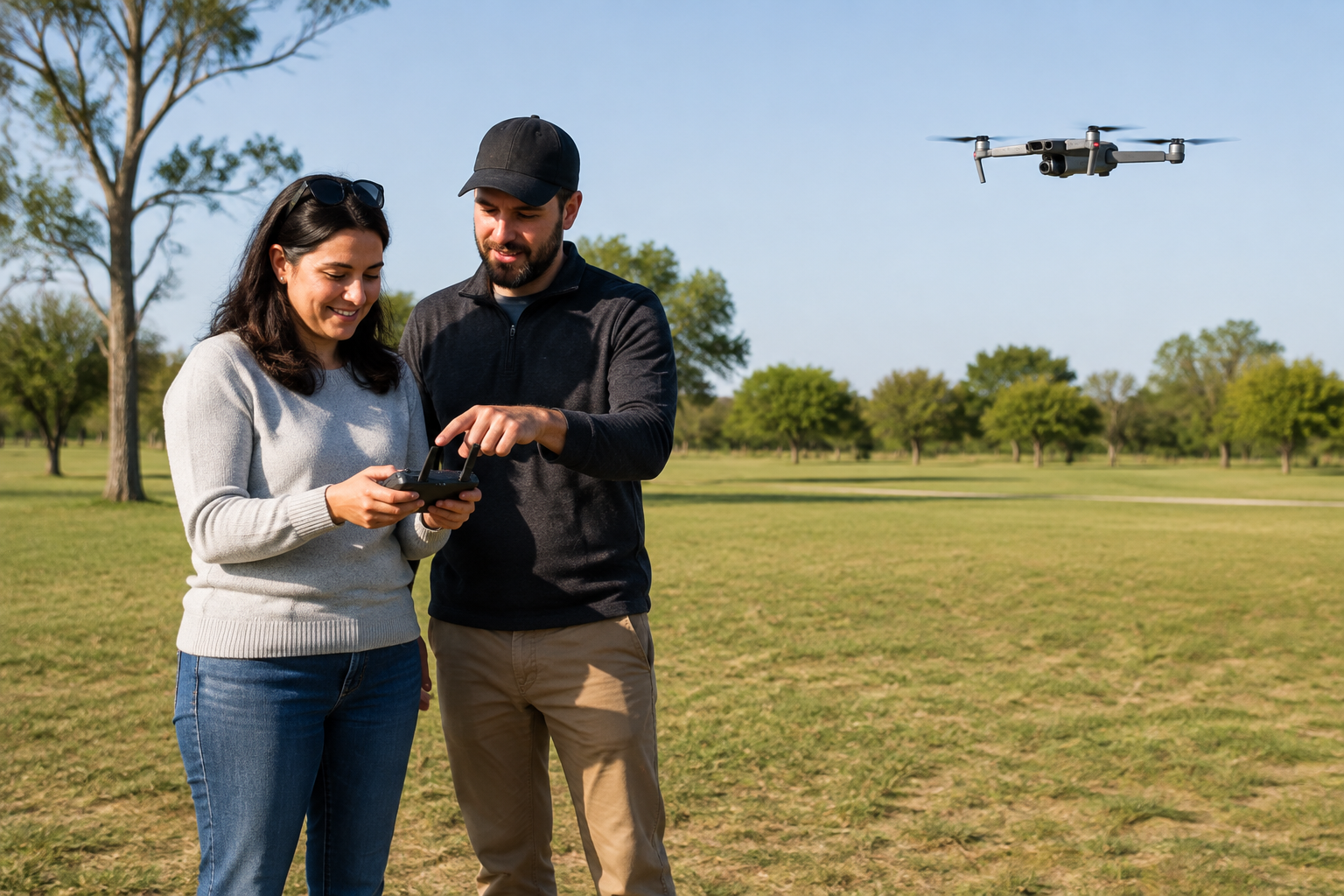
DRONE TRAINING BUILT FOR REAL WORLD CONFIDENCE
From first flight to professional missions.

SMALL GROUP INSTRUCTION
Learn the fundamentals and build confidence behind the controls.
HANDS-ON FLIGHT TIME
TRAINING AIRCRAFT AVALIABLE

SAN ANTONIO-BASED
CHOOSE YOUR TRAINING PATH
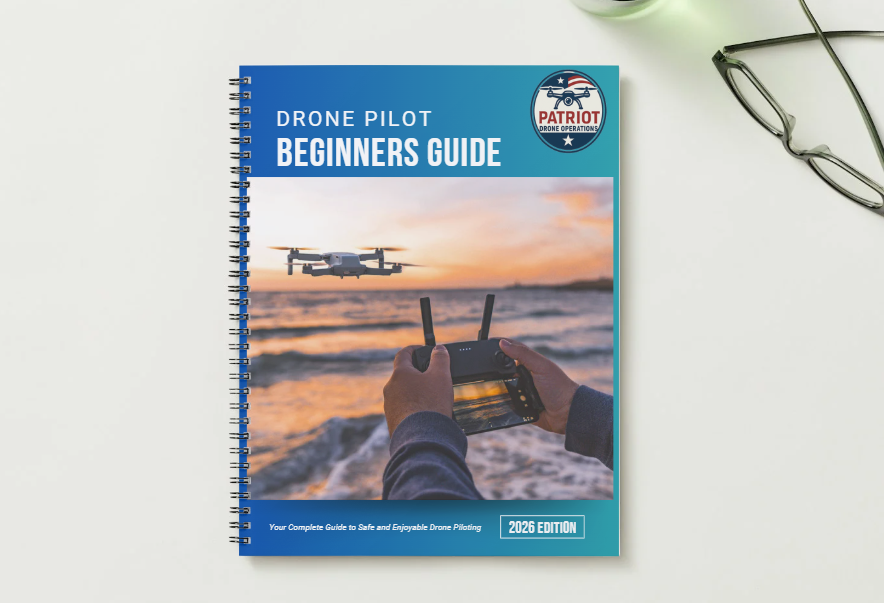
BEGINNER DRONE TRAINING
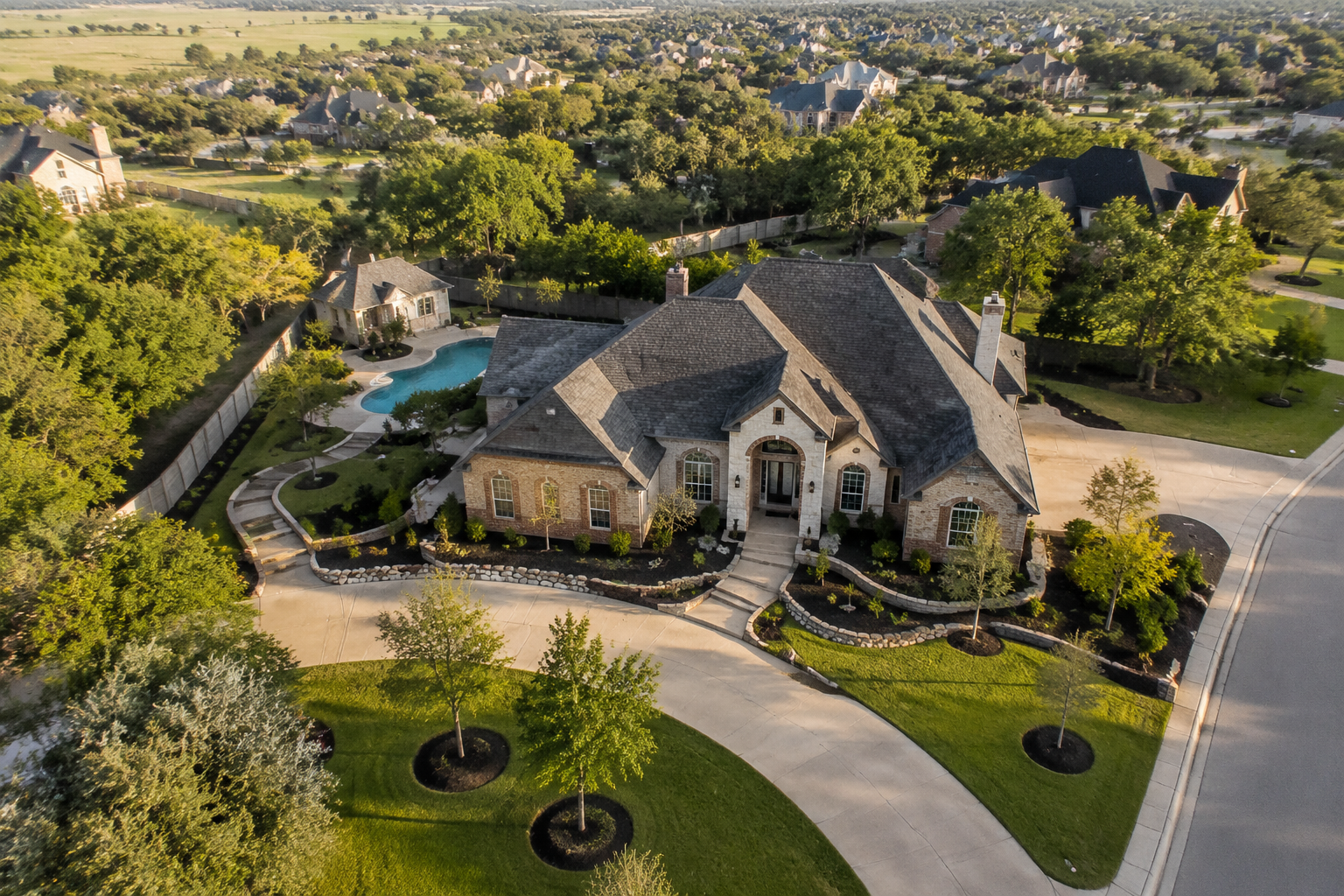
FOUNDATIONS OF FLIGHt
Expand on the fundamentals and learn how to take effective imagery and advanced obstacle avoidance techniques.

part 107 preparation
Prepare for the FAA Part 107 exam and fly with commercial confidence.
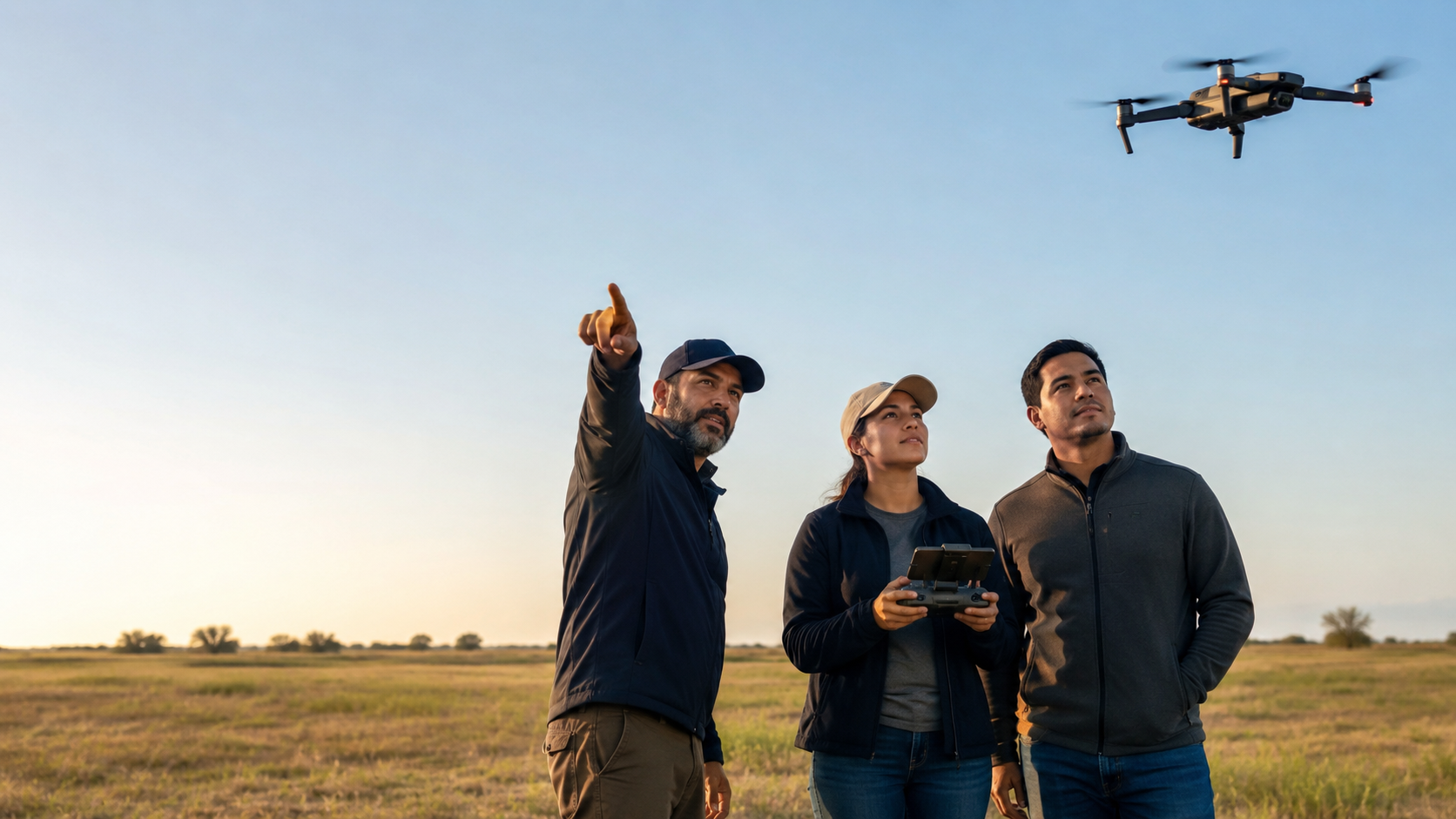
private instruction
Personalized training based off your goals and skill level.
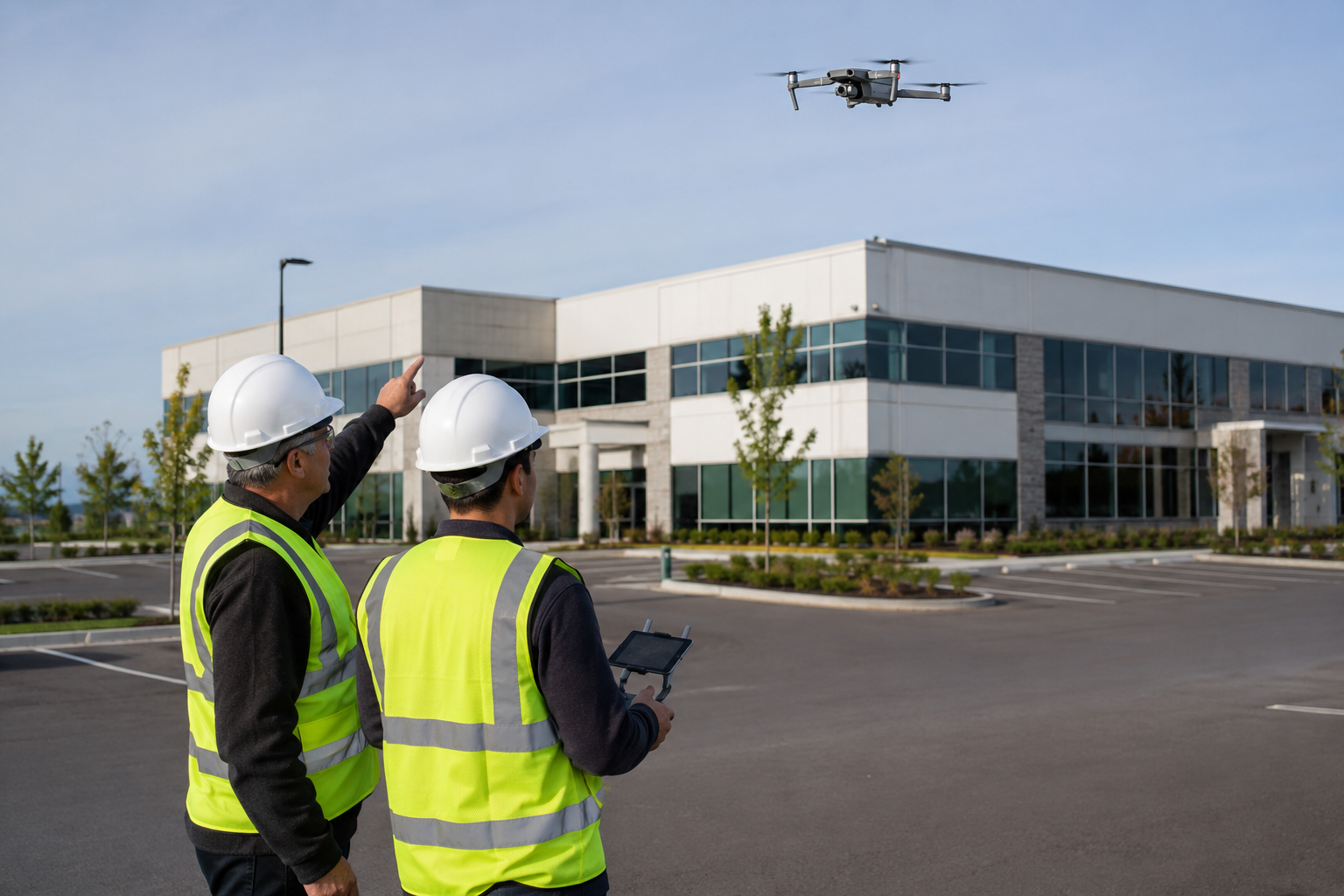
organizational uas training
Custom training for teams and mission-specific operations.
TRAINING FOR EVERY MISSION

New Pilots
New to drones? Start with the basics and take your first flight with confidence.

Aspiring Professionals
Build advanced skills and credentials to launch your career in the drone industry.

Veterans and First Responders
Mission-ready training build for service, leadership, and real-world impact.

Businesses and Public Safety Organizations
Equip your team with the training to operate safely, legally, and efficiently.
how training works

CHOOSE
Select the training path that matches your goals and experience level.

PREPARE
We’ll send materials and resources to help get you ready.

TRAIN
Learn through hands-on instruction and real-world scenarios.

ADVANCE
Apply your skills, knowledge, experience, and take on new missions.

TRAIN WITH EXPERIENCED UAS PROFESSIONALS
✓ 8 years military service
✓ 25+ years law-enforcement
✓ 10+ years UAS and Counter-UAS experience
✓ Airspace, safety, and risk management expertise
✓ Practical, mission-focused instruction
request training informATION
Frequently Asked Questions
-
The Beginners course is the best starting point for new pilots who want hands-on instruction and greater confidence operating a drone. Foundations of Flight is designed for pilots who want to collect organized, professional imagery of roofs, buildings, towers, solar panels, and other structures. Part 107 Preparation is for students preparing for the FAA Remote Pilot knowledge exam.
If you are unsure, submit the Request Training Information form and we will recommend the most appropriate option.
-
No. Foundations of Flight and private beginner instruction are designed for students with little or no flight experience. More advanced and mission-specific courses may recommend basic flight proficiency before attendance.
Your experience level helps us place you in training that is challenging without being overwhelming.
-
Not necessarily. Aircraft availability depends on the course and number of participants. Students who own a drone are encouraged to provide the make and model when registering so the instructor can determine whether it is appropriate for the planned training.
Contact us before purchasing a drone if you would like help selecting an aircraft that fits your goals.
-
For training-placement purposes:
No experience: You have never flown a drone.
New pilot: You have fewer than 10 flight hours.
Developing pilot: You have approximately 10 to 25 flight hours.
Intermediate pilot: You have approximately 26 to 50 flight hours.
Experienced pilot: You have more than 50 flight hours.
Professional operator: You regularly use drones for paid, organizational, government, or public-safety work.
These categories are used only to recommend training and are not formal certifications.
-
No. Recreational and beginner students do not need a Remote Pilot Certificate to attend most courses. Anyone who operates a drone for business, compensation, or another non-recreational purpose generally needs to comply with FAA Part 107 requirements.
Part 107 Preparation teaches the knowledge needed to prepare for the FAA exam, but Patriot Drone Operations does not issue the FAA Remote Pilot Certificate.
-
Most in-person flight courses include hands-on aircraft setup, preflight procedures, flight exercises, emergency-procedure practice, and instructor feedback. The amount of flight time depends on the course, weather, airspace, location, class size, and student experience.
Classroom or virtual courses may focus more heavily on regulations, mission planning, procedures, and operational concepts.
-
Training includes:
Aircraft setup and controller familiarization
Preflight inspections
Basic controls and flight maneuvers
Takeoffs and landings
Orientation and situational awareness
Airspace and weather considerations
Emergency procedures
Camera fundamentals
Responsible flight planning
Post-flight procedures
The objective is to help students become safer, more confident, and more deliberate pilots.
-
Contact Patriot Drone Operations before registering a participant under 18. Parent or legal-guardian authorization, attendance, and additional documentation may be required depending on the participant’s age and the course.
-
Eligible instructor-led courses may include a Patriot Drone Operations certificate of completion. A course-completion certificate documents participation but is not an FAA license, professional inspection credential, or authorization to perform work that requires a separate license.
Confirm certificate availability on the individual course page.
-
Yes. Counter-UAS awareness, threat recognition, observation, reporting, response planning, tabletop exercises, and organizational preparedness are available through dedicated Counter-UAS training programs.
Counter-UAS services do not include unauthorized signal jamming, communications interference, aircraft takeover, destruction, or other unauthorized active mitigation.
-
No. Patriot Drone Operations teaches drone flight, mission planning, camera operation, systematic imagery collection, file organization, and professional delivery practices.
The course does not qualify students to provide engineering, structural, roofing, insurance-adjusting, electrical, or other licensed professional conclusions. Students are responsible for operating within the laws and professional licensing requirements applicable to their work.
-
Safety comes first. Flight activities may be delayed, modified, moved to another suitable location, or rescheduled because of wind, rain, extreme heat, airspace restrictions, temporary flight restrictions, or other unsafe conditions.
Students will receive scheduling instructions using the contact information provided during registration.
-
Public courses are generally held at approved locations in the San Antonio and Central Texas area. Private and organizational training may be conducted near the client’s location where the property, airspace, safety conditions are suitable.
Exact meeting instructions are provided to registered participants before the course.
-
Yes. Private training can be tailored to your aircraft, current skill level, schedule, and professional goals. One-on-one instruction is especially useful for pilots who want focused practice, assistance with a specific aircraft, a flight refresher, or customized mission exercises.
-
Yes. Organizational training can be customized around the client’s aircraft, mission, personnel, operating environment, standard operating procedures, and risk-management requirements.
Available topics may include program fundamentals, mission planning, airspace coordination, flight safety, data handling, scenario-based exercises, inspection imagery, and Counter-UAS awareness.
-
Class size varies by course. Hands-on courses are intentionally limited so each participant can receive meaningful instructor interaction and flight time. Larger organizations can request multiple instructors, separate training groups, or a customized training schedule.
-
Registered students will receive a course-specific packing list. Depending on the course, participants may be asked to bring:
Their drone and controller
Charged flight batteries
Mobile device or tablet
Charging equipment
Memory cards
FAA registration information
Remote Pilot Certificate, if applicable
Notebook and pen
Water, sunscreen, and weather-appropriate clothing
Do not bring or operate an aircraft with damaged batteries, propellers, or other unsafe components.
-
Yes. On-site training may be available for organizations, agencies, private groups, and special projects. Travel costs, location suitability, airspace, equipment requirements, and the number of participants are reviewed before a proposal is issued.
-
Select View Courses to see currently scheduled classes, locations, pricing, and remaining availability. For private, organizational, public-safety, or customized training, submit the Request Training Information form to receive recommendations and pricing.